If you buy a desk or chair to work from home, you may be able to claim a tax deduction. The rules depend on what the item cost, how much you use it for work and the records you keep. This guide summarises how the Australian Taxation Office (ATO) treats office furniture for individuals. It's general information only: tax rules change and depend on your circumstances, so check the ATO's website or talk to a registered tax agent.
This guide is general information written in our own words, based on the official sources listed at the end. It isn't health, legal or tax advice. Everyone's body, work and space are different, so if you have pain or a health condition, talk to a health professional, and check tax questions with the ATO or a registered tax agent. We don't sell furniture or recommend particular brands or shops.
Can you claim office furniture?
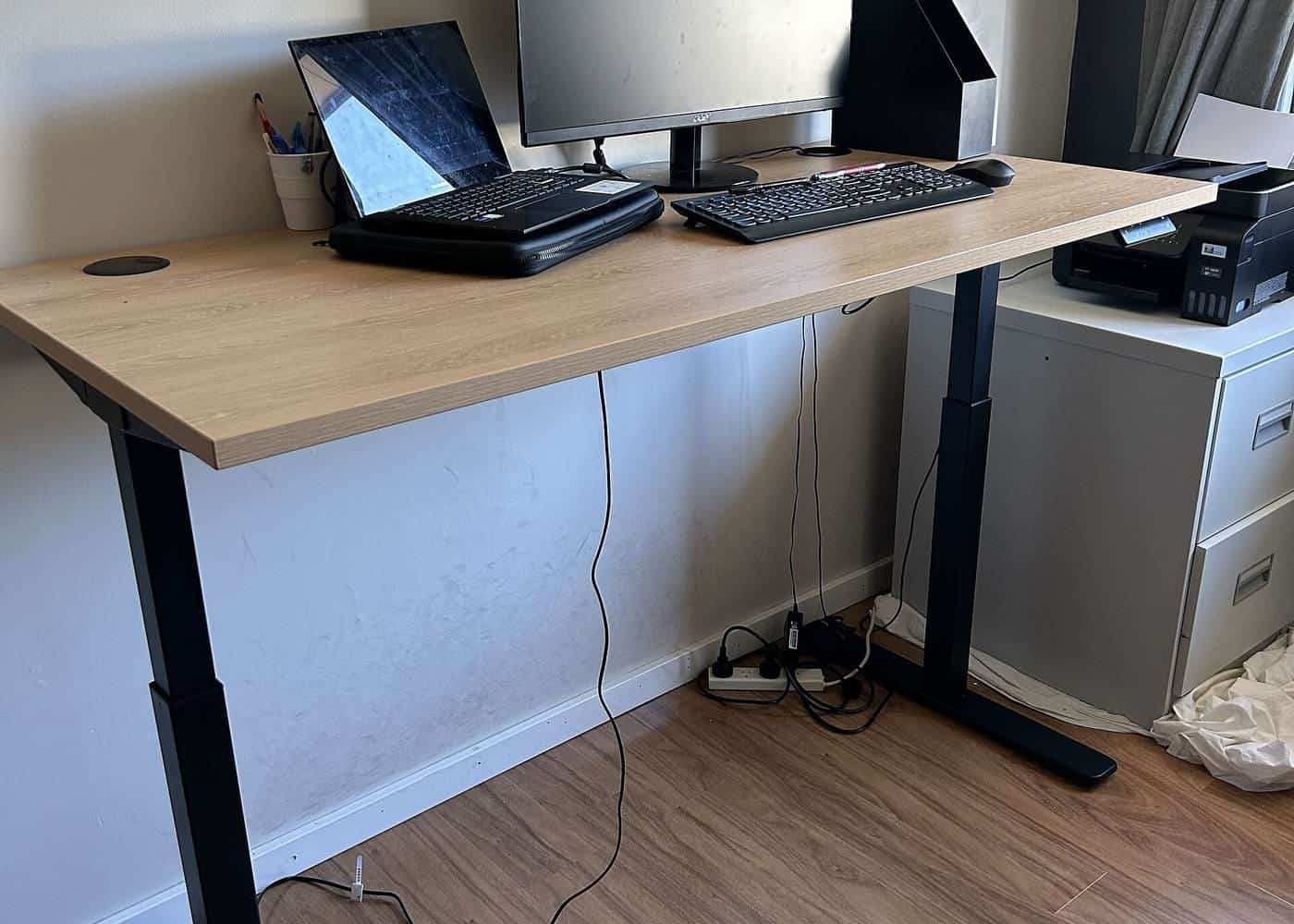
The ATO says you can claim a deduction for office furniture and equipment you use for work, such as an office desk, office chair, desk lamp, bookshelves, and power boards and charging cables. To claim, it says you must:
- use the items in connection with performing your work duties;
- work out whether you can claim the cost in the year you buy it or the decline in value over its effective life; and
- have a record of your expenses and use of the item.
When you use an item for both private and work purposes, you can only claim the work-related portion.
Items costing $300 or less
The ATO says an immediate deduction is available for items that cost $300 or less, if you use them more than 50% of the time for a work purpose and you meet the conditions of the four tests it sets out. The ATO's fixed rate method page gives an example of a person who buys a desk and an office chair, each costing less than $300 and used only for working from home, claiming the cost of both in that income year.
Items costing more than $300
For items costing more than $300, the ATO says you claim the decline in value over the item's effective life. You choose either:
- the prime cost method, which assumes the value decreases uniformly over the effective life; or
- the diminishing value method, which assumes the value decreases faster in the early years.
The ATO provides a Depreciation and capital allowances tool to help work out the decline in value. Sit-stand desks and quality chairs often cost more than $300, so this is the method that applies to many purchases.
Apportioning for private use
If you also use the desk for private purposes, such as personal admin, gaming or study unrelated to work, you can only claim the work-related percentage. Keep a note of how you worked out the work-use percentage.
The fixed rate method
For working from home running expenses, the ATO's fixed rate method lets you claim a rate per work hour. The ATO's myTax instructions for 2025–26 give a rate of 70 cents per hour. The ATO says this rate covers energy (electricity and gas), internet and data, mobile and home phone, and stationery and computer consumables. It doesn't cover the decline in value of depreciating assets, so you can separately claim your desk, chair and other furniture. Rates can change, so check the ATO for the current year.
The actual cost method
Alternatively, the ATO's actual cost method lets you claim the actual additional running expenses you incur from working from home, with records to support them. Either way, furniture is claimed through decline in value or the immediate deduction.
Records
Keep:
- receipts for the desk, chair and other furniture;
- a record of how you use each item for work, and your work-use percentage;
- records of hours worked from home if using the fixed rate method.
Repairs
The ATO says you can also claim costs to repair and insure office furniture and equipment used for work.
Employers and reimbursements
If your employer reimburses you for a desk or chair, or provides one, different rules apply and you generally can't claim what you've been reimbursed for. Check the ATO's guidance.
Get advice
This is a summary of general ATO guidance for individuals. Business owners and sole traders have different rules. For advice on your situation, contact the ATO or a registered tax agent.
Common mistakes
Common mistakes include claiming the full cost of a desk over $300 in one year, claiming 100% when the desk is also used privately, not keeping receipts, and assuming the fixed rate covers furniture. The ATO's guidance on each of these is on its website. If unsure, ask a registered tax agent.
Example in words
The ATO's fixed rate method page gives an example of a person who buys a desk and an office chair, each costing under $300, and uses them only when working from home. Because each cost $300 or less and was used only for work, they can claim the full cost of both in that year, in addition to their fixed rate claim for running expenses.
Try the desk height checker
Our free desk height checker lets you enter your seated and standing elbow heights, and optionally a desk's lowest and highest settings. It suggests where your desk surface should sit and whether the desk's range covers your heights, using the AS/NZS 4442 ranges that WorkSafe Victoria cites. It runs entirely in your browser, and nothing you enter is sent anywhere.
Where our information comes from
Factual statements in our guides are based on official and authoritative sources, including Safe Work Australia, WorkSafe Victoria, WorkSafe Queensland, the Australian Government Department of Health, the Australian Taxation Office and the ACCC. We link to each source at the end of the page and write everything in our own words. We don't invent statistics, prices or product test results, and we don't rank or review brands.
Everyone is different
Workstation guidance describes general principles that suit most people. Your body, your tasks and your space are unique, and what feels comfortable for one person may not suit another. Use the guidance as a starting point, adjust until you're comfortable and, if you have pain or a health condition, get advice from a health professional such as a physiotherapist or occupational therapist.
Small changes add up
You don't need to replace all your furniture to work more comfortably. Raising a screen, moving a keyboard closer, adding a footrest or standing for phone calls can each make a difference. Start with the change that addresses your biggest discomfort, then review your setup again after a week.
Workplaces and employers
Employers have duties under work health and safety laws to manage risks to workers, including from workstations and from too much sitting or standing, so far as is reasonably practicable. That applies in offices and, in many cases, when people work from home. If your workstation isn't working for you, talk to your manager or health and safety representative.
Corrections and feedback
We review our guides against their sources and show the date each page was last checked. If you notice something out of date or incorrect, such as a change to ATO rates or workplace guidance, please tell us through our contact page. We read every message and correct mistakes promptly.
About this site
Office Desks is an independent information site. We aren't a furniture retailer, manufacturer, ergonomist, government agency or tax adviser, and we don't sell furniture or recommend particular brands or shops. Our guides are general information, not health, legal or tax advice.
Key points
- The ATO lets you claim desks and chairs used for work; only the work-related portion.
- Items $300 or less used more than 50% for work may be claimed immediately.
- Items over $300 are claimed as decline in value over their effective life.
- The fixed rate (70c per hour for 2025–26) doesn't cover furniture, which is claimed separately.
- Keep receipts and records of work use; check the ATO or a tax agent.
Frequently asked questions
Can I claim a desk on tax?
The ATO says you can claim office furniture such as a desk or chair you use for work, generally as a depreciating asset. You can only claim the work-related portion.
What if my desk cost $300 or less?
The ATO says an immediate deduction may be available for items costing $300 or less if you use them more than 50% of the time for work and meet the other conditions.
What if it cost more than $300?
The ATO says you claim the decline in value over the item's effective life, using the prime cost or diminishing value method.
Does the fixed rate cover my desk?
No. The ATO says the fixed rate covers energy, internet, phone, stationery and computer consumables, and you can separately claim the decline in value of furniture such as desks and chairs.
Sources and further reading
Facts on this page were checked against these primary and official sources. Conditions change — confirm before you travel or buy.
- Office furniture and equipment — Australian Taxation Office
- Assets costing more than $300 — Australian Taxation Office
- Fixed rate method — Australian Taxation Office
- Working from home expenses — Australian Taxation Office